The short answer
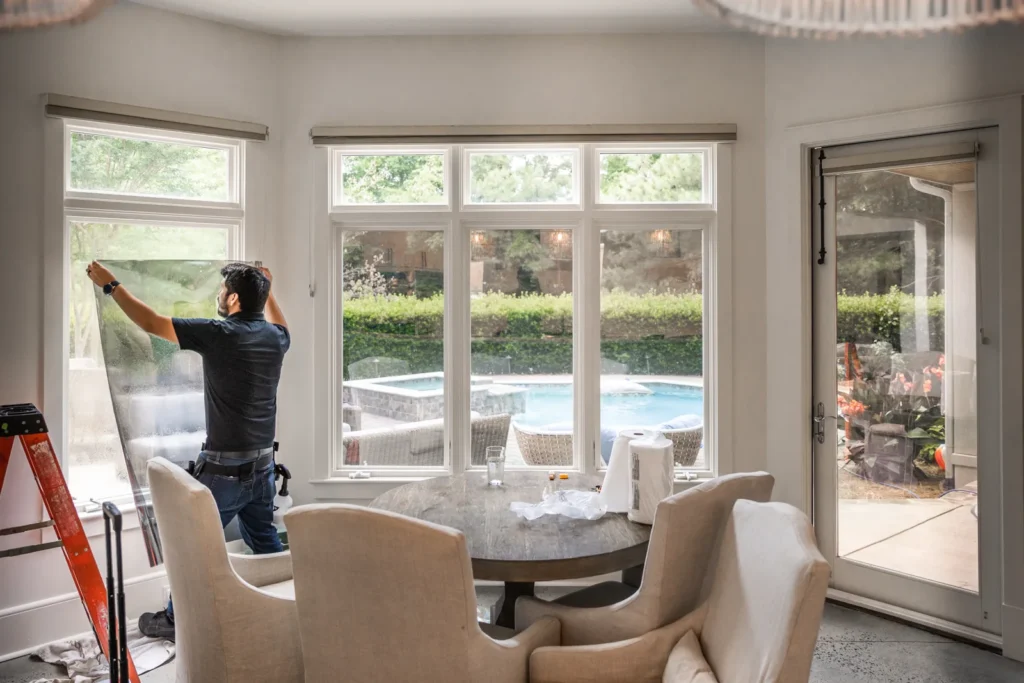
Window film can increase thermal stress on glass when the product and window construction are mismatched. Double-pane windows need a compatibility review that considers coatings, tint, condition, shading and warranty terms. Ask the installer to document manufacturer approval for your specific glass and explain applicable glass and seal coverage.
How thermal stress works
All glass absorbs some solar energy, and tinted glass absorbs more than clear glass (3M). When the sunlit center of a pane heats up while the edges, hidden in the frame, stay cooler, the center expands more than the edge. That difference is thermal stress.
According to 3M's technical bulletin:
- Glass is made to withstand roughly 3,000 to 5,000 psi of edge stress.
- When edge stress exceeds edge strength, breakage occurs.
- Edge strength depends on glass size, thickness, how it was cut, and how the edge was treated. A clean, straight edge is strongest.
- Damaged edges can reduce edge strength by up to 50 percent.
- A thermal stress crack typically starts at the edge, at least 2 inches from a corner, and runs perpendicular to the edge for the first half-inch to an inch.
Source: 3M thermal stress bulletin. That distinctive pattern helps distinguish a thermal crack from an impact crack.
The International Window Film Association puts it simply: "Glass breaks when stressed," and absorption of solar radiation is the type of stress film may affect (IWFA).
Why double-pane units need extra care
In an insulating glass unit, a film applied to the inner pane changes how both panes heat. A film that absorbs heat warms the inner pane and can drive more heat toward the airspace and outer pane. Whether that is safe depends on the unit's construction: pane thickness, whether the glass is annealed, heat-strengthened or tempered, whether there's a low-e coating and which surface it's on, gas fill, and unit size.
The IWFA notes that whether film is suitable on low-e windows depends on the type of low-e surface, where it sits in the window, and the performance you want, and advises homeowners to ask their dealer whether their low-e windows can be filmed (IWFA).
Conditions that raise risk
3M lists conditions that increase thermal stress (3M):
- Partial shading from overhangs or extensions, creating hot and cool zones on the same pane
- Tight-fitting drapes or blinds that trap heat against the glass
- Painted signs, decals or labels on glass
- Heating or cooling vents blowing directly on the glass
Other factors that installers typically consider: very large panes, thick annealed glass, glass with chipped or damaged edges, and dark or highly absorptive films. Avery Dennison's warranty, for example, excludes certain thick annealed glass, non-rectangular windows over 20 square feet, and windows shaded by exterior overhangs and columns unless conditions are met (Avery Dennison).
Film-to-glass compatibility charts
Film manufacturers publish compatibility tables that match each film to approved glass types. The IWFA says manufacturers provide these film-to-glass tables for their dealer installers, and that if in doubt, a consumer should ask for a copy (IWFA). Avery Dennison's warranty directs users to its Film to Glass Application Chart for approved combinations (Avery Dennison).
A good installer should be able to tell you which category your glass falls into and why the film they're proposing is approved for it.
The seal warranty question
The bigger practical issue for many homeowners is the window manufacturer's warranty, not breakage. Some window makers state that aftermarket film voids or limits their insulating glass seal warranty. The Canadian Conservation Institute notes that self-adhesive films "may void warranty on sealed insulating glass windows" (Canadian Conservation Institute).
Film manufacturers respond with their own coverage:
| Manufacturer | Glass breakage (residential) | Seal failure (residential) |
|---|---|---|
| 3M (standard flat-glass warranty) | Up to 5 years; up to $1,500 per window | Matches OEM seal warranty up to 10 years if film voids it; up to $1,500 per window |
| Avery Dennison (interior architectural) | 5 years for thermal-shock breakage; up to $500 per glazing unit | 3 years; up to $500 per unit |
Sources: 3M Warranty Bulletin; Avery Dennison. Terms change; read the current version for your specific product. 3M requires the purchaser to first pursue any valid window manufacturer coverage.
How to lower the risk
- Find your window details. Manufacturer, year, glass type and any low-e coating. Labels are often etched in a corner of the glass or on the frame.
- Read your window warranty for language about films or aftermarket coatings.
- Ask the installer to check compatibility against the film manufacturer's chart and to put the glass type in writing.
- Prefer lower-absorption films on sensitive glass. Your installer can explain the solar absorption value.
- Inspect the edges. Chipped or damaged edges should be noted before installation.
- Avoid trapping heat with tight drapes against filmed glass, and don't aim vents at windows.
- Register the film warranty and keep receipts plus your window warranty documents.
Questions to ask an installer
- What type of glass do I have, and how did you determine it?
- Is this film approved for my glass on the manufacturer's film-to-glass chart?
- What is the film's solar absorption?
- Will this affect my window manufacturer's seal warranty, and what does your film warranty cover if it does?
- Who handles a claim, and what documentation will I need?
Common questions
Can any film go on double-pane glass?
No. Compatibility depends on the exact film and glass construction, including coatings and condition. Use the manufacturer’s approval process for the proposed combination.
Does a film warranty automatically cover my windows?
No. Glass and seal coverage can have specific exclusions, limits and registration requirements. Request the written terms that apply to your installation.
What should the installer check?
Ask about glass construction, low-e coatings, existing tint, damaged edges, shading patterns and the window manufacturer’s warranty before approving a film.
Sources
- 3M: Thermal stress technical bulletin (2019)
- 3M: Window film warranty bulletin
- Avery Dennison: Interior architectural window film warranty
- International Window Film Association: FAQ
- Canadian Conservation Institute: Agents of deterioration, light
Want this answered for your own windows?
Planning a home or office project in the Charlotte area of North Carolina or South Carolina? Request a project-specific quote and include your installation ZIP code. Availability is confirmed for your address.
Related guides
- Low-E Glass vs. Solar Control Window Film
- Understanding Solar Heat Gain Coefficient
- Window Film for Historic Homes
Planning a project in the Charlotte area? Explore Sun Stoppers home window tinting services. For workplace glare or glass privacy, see commercial window tinting in Charlotte.
Still comparing options? Ask a question about your windows. For approximate coverage within 40 miles of Uptown Charlotte, check the service-area ZIP list.
Updated October 20, 2026. Educational guidance from Tint My Home Windows, powered by Sun Stoppers. Film selection, glass compatibility and warranty terms require project-specific confirmation.